
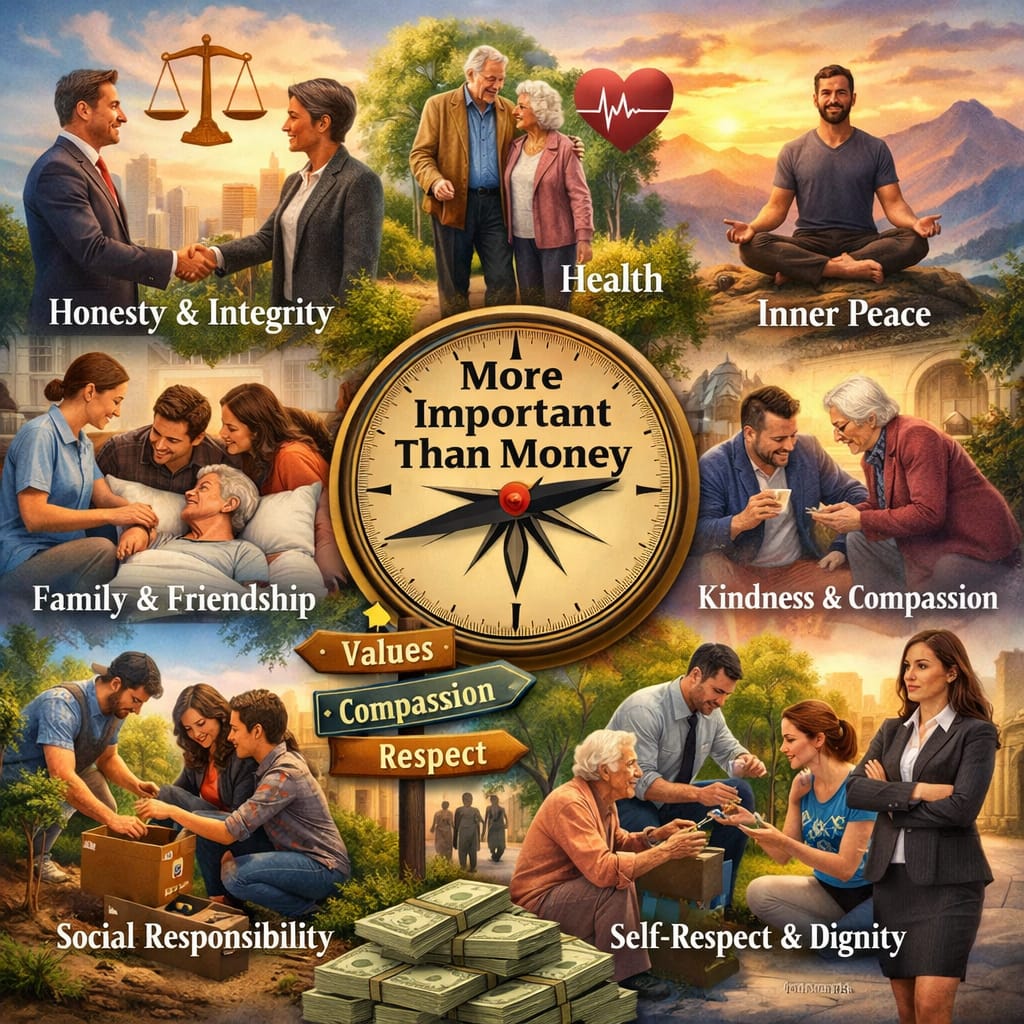
Beyond Currency: The Wealth That Money Cannot Buy
In the modern marketplace, money is not merely a medium of exchange; it is a measure of security, status, and sometimes even self-worth. It pays our bills, funds our education, sharpens our professional competence, and cushions our families against uncertainty. Without money, survival becomes a daily negotiation.
Yet, despite its undeniable importance, money remains a tool — not the architect of a meaningful life. The tragedy of our times is not the pursuit of wealth; it is the confusion of wealth with worth.
Let us explore the assets that never fluctuate with the stock market and never depreciate with time.
- Character: The Invisible Capital
Honesty and integrity are not fashionable words; they are foundational virtues. A person may accumulate fortunes, but without character, even success feels hollow.
Character is what remains when the applause fades. It is the silent reputation that enters a room before you do. In professional life, competence may open doors, but integrity keeps them open.
One act of dishonesty can cost more than years of earnings.
- Health: The True Wealth
You may afford the finest hospitals, but you cannot outsource vitality. A healthy body and a peaceful mind are the real luxuries.
Stress, ambition, and endless comparison often convert prosperity into pressure. Ironically, many people spend their youth earning money and their later years spending that money to recover lost health.
Well-being is not an expense; it is an investment.
- Peace of Mind: The Silent Dividend
A restless millionaire envies the sleep of a content school teacher.
Peace of mind does not arise from accumulation; it arises from alignment — when your values, actions, and conscience walk together. Inner harmony is a silent dividend paid to those who live ethically and purposefully.
Money can buy comfort; it cannot buy calmness.
- Relationships: The Real Support System
Standing by family and friends during critical moments is a priceless virtue. In times of crisis, emotional presence outweighs financial power.
True relationships are built on loyalty, empathy, and shared experiences — not transactions. The warmth of a supportive spouse, the trust of a friend, the guidance of a mentor — these are assets no currency can quantify.
- Kindness and Gentleness: Strength in Disguise
In a competitive world, kindness is often mistaken for weakness. In reality, it is refined strength.
Gentleness reflects emotional maturity. It shows that power does not need aggression and that confidence does not require arrogance. A kind word can heal wounds that money cannot touch.
The richest people are not those who possess the most, but those who uplift the most.
- Social Responsibility: Wealth with Purpose
Money without purpose breeds indulgence; money with responsibility builds legacy.
Contributing to society, mentoring others, supporting causes, and acting ethically in business transform financial success into meaningful impact. True prosperity includes the welfare of others.
- Self-Respect and Dignity
Self-respect cannot be purchased; it must be earned.
It arises from living according to principles, fulfilling commitments, and acting with courage even when convenience tempts compromise. When self-respect is intact, external validation becomes secondary.
The Final Reflection
We cannot live without money. It is necessary for education, career growth, security, and comfort. However, money is a powerful servant but a poor master.
A life driven solely by financial ambition often sacrifices the very elements that make life worth living — love, trust, peace, and purpose.
The wise individual earns money diligently but never allows money to dictate values. They understand a simple truth:
Money can enhance life, but only values can elevate it.
In the end, the balance sheet of life is not audited in currency — it is measured in character, relationships, health, and the positive impact we leave behind.
The question, therefore, is not how much we earn, but what kind of human being we become while earning it.